
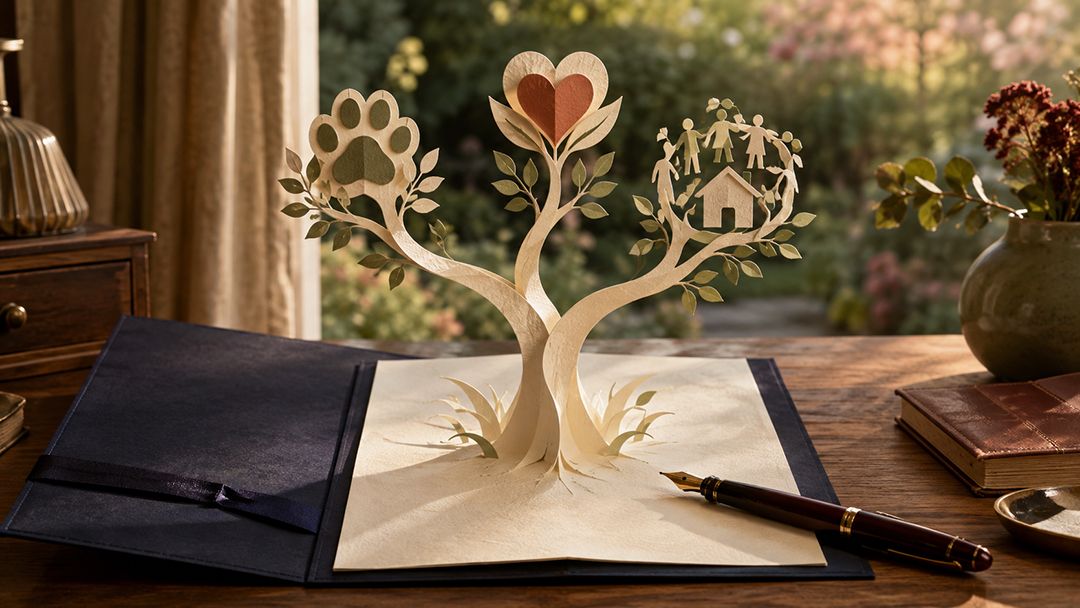
For some people, making a Will brings up a question that is rarely covered by the usual family-focused advice: what should happen to the estate when there is no obvious person to leave everything to?
Perhaps there are no children or close relatives. Family members may already be financially secure, or a particular charity may simply feel more closely connected to the life you have lived. Whatever the reason, leaving some or all of an estate to charity can be a positive and deeply personal decision.
It does not have to mean overlooking everyone around you. A Will might leave treasured belongings to friends, a modest cash gift to a helpful neighbour and the remainder to a hospice, animal rescue or community organisation. Another person may prefer one charity to receive everything.
There is no single correct approach. What matters is creating a clear plan that reflects your relationships, responsibilities and the causes you genuinely care about.
A charitable Will can be personal, not impersonal
People sometimes worry that leaving an estate to charity will appear distant or unusual. In reality, the choice often has a strong personal story behind it.
A hospice may have cared for someone important. An animal charity might reflect a lifelong love of pets. A local organisation may have provided friendship, practical support or a sense of belonging. Other people want to support medical research, conservation, education or a faith community that has shaped their values.
The gift does not need to be made to a large national organisation. A local charity can be included, provided it is identified correctly and is able to receive the gift. Some people divide the estate between several causes so that different parts of their life are represented.
Without a valid Will, personal wishes of this kind will not decide what happens. The estate is distributed under the rules of intestacy. If there are no entitled relatives, it may eventually pass to the Crown rather than to friends, neighbours or the charities the person would have chosen.
A properly written Will replaces that uncertainty with a decision of your own.
Everything to one charity—or a combination of gifts?
Leaving everything to charity is one option, but it is not the only way to create a worthwhile legacy.
You can leave all of the estate to one charity, divide the remainder between several organisations or combine charitable gifts with gifts to people. The most suitable structure will depend on the assets involved and how much flexibility you want the Will to have.
| Type of gift | How it works | What to consider |
|---|---|---|
| Whole residuary estate | The charity receives what remains after debts, expenses and any other gifts have been dealt with. | This can adapt as the value and contents of the estate change. |
| Share of the residue | A stated percentage of the remaining estate passes to one or more charities. | Percentages should cover the whole residue and the Will should explain what happens if a charity cannot receive its share. |
| Fixed cash gift | A charity or person receives a stated amount of money. | Inflation and changes in the estate’s value can make a fixed amount more or less significant over time. |
| Specific gift | A particular possession, investment or property is left to a named recipient. | The gift may fail if the asset is no longer owned, and a charity may prefer sale proceeds to an item it cannot easily use. |
A residuary gift is often useful because it changes naturally with the estate. If savings, property values or care costs alter during your lifetime, the charity still receives the chosen share of whatever remains.
Fixed gifts can work well for friends or neighbours, while personal possessions can be left to people who will appreciate their meaning. The residue can then pass to charity. This allows a Will to recognise both personal relationships and wider causes without needing every gift to be treated in the same way.
Choose and identify each charity carefully
Once you have decided which causes matter, the charities need to be described clearly enough for your executors to identify them.
Using the organisation’s full registered name, charity number and principal address can reduce the risk of confusion, particularly where several charities have similar names or a local branch is connected to a larger organisation. Details can be checked through the Charity Commission’s register before the Will is prepared.
Charities can merge, change their names or close. A well-drafted Will can explain what should happen if a chosen organisation no longer exists or cannot accept the gift. Depending on your wishes, the gift might pass to a successor organisation, another named charity or an organisation carrying out similar work.
You may also want the gift used for a particular service or area. That can be appropriate, but restrictions need careful wording. A very narrow instruction could become impossible to follow years later if the charity’s work changes. Sometimes it is better to express a preference while allowing the charity enough flexibility to use the money effectively.
If the proposed gift is substantial, speaking to the charity can help you understand how legacies are handled. You do not have to disclose the value, and there is usually no obligation to tell a charity that it has been included in your Will.
Remember the people and responsibilities around you
A charitable estate plan can still make room for the people who have brought companionship, kindness or practical help into your life.
A close friend might receive a piece of jewellery, artwork or a sum of money. A neighbour who has offered years of support could be remembered with a modest legacy. Personal letters, photographs and sentimental belongings can be directed to the people most likely to value them.
Pets also need a practical plan. An animal cannot inherit directly, but the Will can identify a trusted person who is willing to provide care and leave money to help with reasonable costs. The arrangements should be discussed in advance rather than assumed.
It is especially important to consider anyone who relies on you financially or whom you have been supporting. In England and Wales, certain family members and dependants may be able to bring a claim if a Will does not make reasonable financial provision for them. That does not mean a charitable gift is automatically invalid, but the circumstances should be considered carefully before leaving the whole estate elsewhere.
The choice of executors matters too. They will need to value assets, settle liabilities, deal with personal possessions and communicate with the charities and other beneficiaries. Choose people who are willing and capable, or consider professional involvement where the estate is complex or there is nobody suitable to take on the role alone.
How charitable gifts can affect Inheritance Tax
Gifts left to qualifying charities are generally exempt from Inheritance Tax. Their value is deducted from the estate before the tax calculation is made.
If the entire net estate passes to qualifying charities, there would normally be no Inheritance Tax on that charitable gift. Where an estate is divided between charitable and non-charitable beneficiaries, the calculation will depend on the value of the estate, available allowances and the wording of the Will.
Leaving at least 10% of the relevant net estate to charity may reduce the Inheritance Tax rate applied to the taxable part of the estate from 40% to 36%. However, the 10% test is more technical than simply taking 10% of everything a person owns. An estate may be divided into different components for the calculation, and debts, exemptions and available nil-rate bands can all affect the result.
Tax can be a useful consideration, but it should support the plan rather than drive it. A carefully drafted gift can make sure the amount reaching charity reflects your intention while avoiding an unexpected result for other beneficiaries.
Clear wording can help prevent uncertainty later
A decision to leave most or all of an estate to charity may sometimes surprise relatives or other people who expected to benefit. That makes clarity particularly important.
Professional drafting can help demonstrate that the Will was made freely, that its effect was understood and that the chosen beneficiaries were identified properly. Where there is a realistic possibility of disagreement, keeping an appropriate record of the reasons behind the decision may also be helpful.
A separate letter of wishes can add personal context, but it should not be treated as a substitute for the Will itself. The legally important gifts and instructions need to appear in the Will with suitable wording.
Do not rely on a promise that a friend or relative will pass money to a charity afterwards. Unless the Will creates the gift, that person would generally receive the inheritance for themselves and may have no legal obligation to follow an informal request.
Keep the plan connected to the life you are living
A charitable Will should not be written once and then forgotten.
Friendships develop, charities change and the value or makeup of an estate can look very different after a house move, inheritance or period of care. A person who was once financially independent may later need support. Executors may become unable or unwilling to act.
Reviewing the Will every few years—and after a major change—gives you the opportunity to confirm that the charities still reflect your wishes, personal gifts remain appropriate and the practical arrangements still work.
It is also sensible to keep an up-to-date list of important financial information and make sure the executors know where the original Will is stored. They do not need access to everything during your lifetime, but they should be able to find what they need when the time comes.
A legacy shaped by what mattered to you
There is nothing incomplete about a Will that leaves an estate to charity. It can be a final expression of the interests, experiences and communities that gave a person’s life meaning.
The right plan might support one organisation, share the estate between several causes or combine charitable giving with thoughtful gifts to friends and neighbours. What matters is that the Will is clear, practical and genuinely reflects your intentions.
Westfield Wills can help you consider the people, charities and responsibilities that matter to you, then turn those choices into a carefully structured Will. To discuss your wishes, contact Westfield Wills or call 01756 540 541.
Important information: This article is provided for general information only and does not constitute legal, financial or tax advice. Will drafting, charitable exemptions and Inheritance Tax treatment depend on individual circumstances and the rules may change. Professional advice should be obtained when preparing or updating a Will, particularly where there are dependants, substantial assets or possible competing claims.
0 Comments