
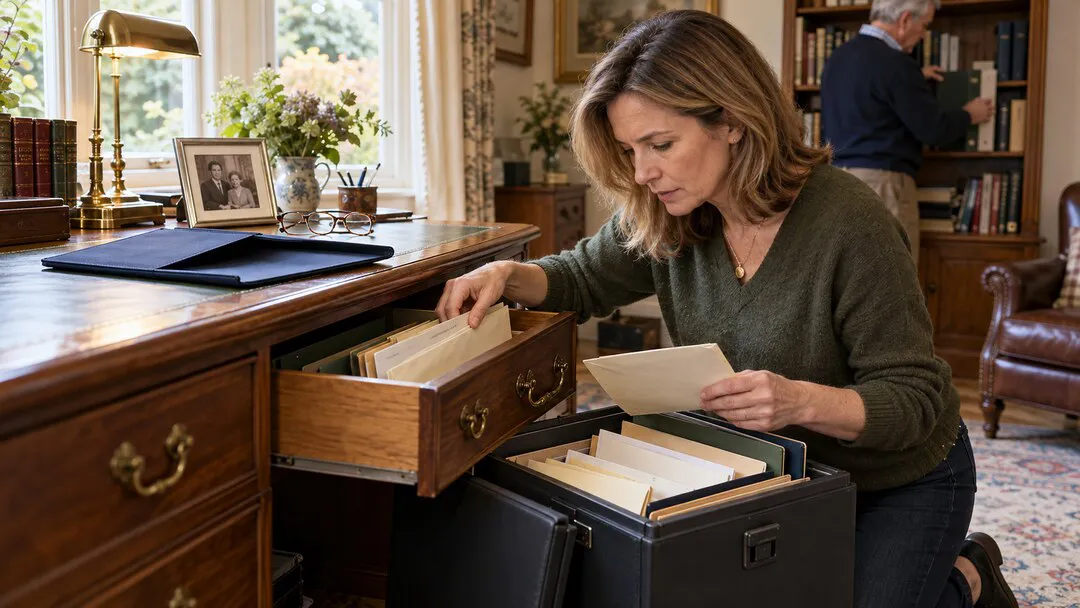
A family may know that a Will was made. They may even have a photocopy showing exactly who should inherit. But when the person dies, the signed original is nowhere to be found.
That missing document can turn an apparently straightforward estate into a much more uncertain probate application.
The good news is that a lost original Will does not automatically mean the estate must be distributed under the intestacy rules. In some circumstances, a copy can be admitted to probate. However, it is not accepted simply because the family believes it reflects the deceased person’s wishes.
The Probate Registry will want evidence that the Will was valid, what it contained and why the original cannot be produced.
Why does probate normally require the original Will?
The original signed Will is the primary evidence of the deceased person’s final instructions. It shows the document that was executed and allows the Probate Registry to inspect its condition.
A photocopy cannot always reveal whether the original was later altered, damaged or deliberately destroyed. It may also be impossible to tell from a copy whether a newer Will or codicil replaced part of the arrangement.
For a standard probate application in England and Wales, the original Will is submitted to HM Courts and Tribunals Service. Once a grant is issued, the Will becomes a public probate record and the original is not returned.
This is why knowing that a Will exists is not quite the same as knowing where the legally important original has been stored.
Do not assume the Will has been revoked
The first step is a thorough and methodical search. Avoid distributing the estate under intestacy or relying on an earlier Will until reasonable enquiries have been completed.
Check the places where the deceased kept important papers, including:
- a home safe, filing cabinet, desk or locked drawer;
- boxes containing property deeds, insurance and pension records;
- the solicitor or Will-writing firm that prepared the document;
- a bank, accountant or professional document-storage service;
- correspondence showing that the Will was placed in safe custody;
- papers held by an executor or trusted relative; and
- records of any registered Will-storage location.
Look for codicils as well as the Will. A codicil changes part of an existing Will and its original may also be required.
Keep a written record of the enquiries made, who was contacted and which locations were searched. That information may later form part of the evidence supplied to the Probate Registry.
What if a photocopy or scanned copy exists?
A copy is valuable evidence, but it does not automatically have the same status as the missing original.
Where the applicant is representing themselves, HMCTS provides form PA13 to report a lost Will alongside the probate application. Probate practitioners follow a different evidential process rather than using the form.
The PA13 questionnaire asks detailed questions, including:
- whether the original was seen after the death;
- when it was last seen and who held it;
- where it was stored after signing;
- what searches and enquiries have been completed;
- how the copy was obtained;
- whether the Will’s witnesses are available;
- whether earlier Wills or other written wishes exist; and
- who would be disadvantaged if the copy were admitted to probate.
The Probate Registry may request further evidence, particularly where somebody who would inherit under an earlier Will or intestacy disputes the application.
Was the original lost—or deliberately destroyed?
This is often the central issue.
If the original Will remained in the deceased person’s possession and cannot be found after death, there may be a strong presumption that they destroyed it during their lifetime with the intention of revoking it.
That presumption can be challenged with evidence. For example, the circumstances may suggest the Will was accidentally discarded during a house move, destroyed in a fire or flood, removed by somebody else, or lost after being sent through the post.
The position may also be different if a solicitor, bank or storage provider held the original and their records indicate that the deceased never collected it.
Evidence that the deceased continued to regard the Will as valid may be relevant. This could include recent conversations, letters, notes, consistent relationships with the beneficiaries or confirmation that they had not instructed anyone to prepare a replacement.
No single fact guarantees success. The complete history of the document, the deceased person’s intentions and the quality of the available evidence all matter.
What evidence can help prove a missing Will?
A clear copy is usually the most useful starting point because it records the wording, beneficiaries, executors and date. Other evidence may include:
- the Will writer’s file, attendance notes and draft documents;
- statements from the witnesses who saw it signed;
- safe-custody records or a receipt for the original;
- letters sent to the deceased or executors after signing;
- evidence of a fire, flood, burglary, house clearance or postal loss;
- statements from people with whom the deceased discussed the Will;
- copies of earlier Wills and codicils; and
- evidence explaining why the original is missing without having been revoked.
Where the copy is incomplete, or no copy survives, proving the precise contents becomes much harder. It may sometimes be possible to reconstruct a lost document using strong evidence, but specialist probate advice is likely to be essential.
What happens if the lost Will cannot be proved?
If the Probate Registry is not satisfied that the missing Will should be admitted, the estate does not necessarily move straight to intestacy.
An earlier valid Will may take effect if it was not revoked by another valid document or act. This is one reason earlier Wills and copies should not be destroyed while a probate application remains unresolved.
If no valid Will can be proved, the estate will normally be distributed under the intestacy rules. That may produce a very different result from the missing document.
An unmarried partner, stepchild, close friend or charity named in the copy may receive nothing under intestacy. Meanwhile, a relative omitted from the missing Will might inherit automatically.
The financial difference explains why lost-Will cases can become contentious. Anyone whose position changes significantly should obtain advice before the estate is distributed.
What if family members disagree about the copy?
A person who would inherit more under intestacy or an earlier Will may question whether the copy truly represents the deceased person’s final wishes. They might argue that the original was intentionally revoked or that a later document existed.
Conversely, a beneficiary named in the copy may believe somebody has concealed or destroyed the original.
These allegations should not be made lightly. Preserving documents, messages, storage records and witness evidence is more useful than relying on suspicion. Where there is a genuine dispute, specialist contentious-probate advice may be required before applying for or challenging a grant.
How can you prevent your own Will from going missing?
Secure storage is part of making a useful Will. The best-written document cannot guide your executors if nobody can locate the original.
Consider storing it with the professional who prepared it or through a suitable secure Will-storage service. If it is kept at home, protect it from fire, water, accidental disposal and unauthorised access.
Your executors should know who holds the original and how to obtain it. They do not necessarily need to know every detail of the Will, but leaving a clear record of its location can prevent weeks of uncertainty.
Keep a copy for reference, clearly noting where the original is stored. Avoid attaching other papers to the original with staples or paperclips and do not write on it, as marks or damage can prompt questions during probate.
Review the Will after major life changes. When a new Will is signed, make sure storage records are updated and superseded versions are dealt with correctly rather than leaving several apparently current originals in different places.
Clear storage protects the plan you have made
A lost original Will creates uncertainty, but it does not always prevent the deceased person’s wishes from being followed. A copy may be admitted to probate where the evidence establishes the document’s contents and explains why the original cannot be produced.
The process becomes far easier when there is a clear copy, professional file, storage record and informed executor. Good Will planning therefore includes both careful drafting and secure, traceable storage.
Westfield Wills can help you prepare or review your Will and make sure the people you trust know how the original can be located when it is needed. Call 01756 540 541, email support@westfieldwills.co.uk or contact Westfield Wills.
Important information: This article provides general information about probate and the law in England and Wales. It does not constitute legal advice. Lost-Will applications and disputes depend heavily on their evidence, so specialist advice should be obtained before administering or distributing the estate.
0 Comments